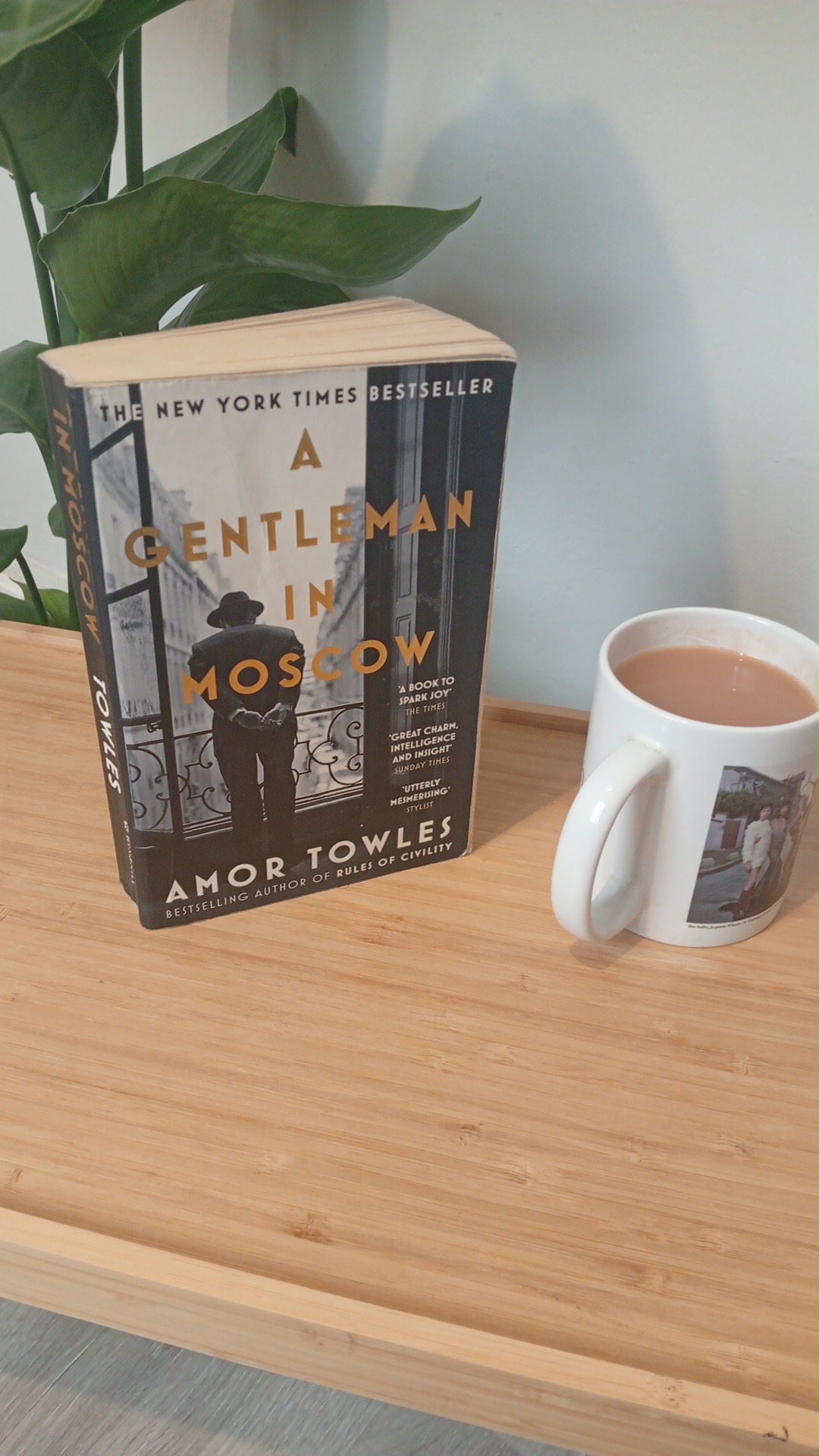
Author - Amor Towles
Publisher - Viking
Year of Publication - 2016
1922
In the aftermath of the First World War, with Europe and beyond still grappling with the terrible consequences of the long conflict, various causes for optimism emerge around the globe. The first Insulin treatment for Diabetes is proven to be a success in Toronto, the Five Power Naval Disarmament Treaty is signed between the major allied powers, and the US Supreme Court upheld women’s right to vote on equal terms to men.
Indeed, the societal upheaval precipitated by the war and its effect on almost every area of life manifested itself in myriad ways. However, the improvements and breakthroughs in hygiene, working conditions, housing, medicine, and the democratic process experienced by some nations were not as quick to emerge in others. To the east, the political landscape was becoming considerably less hopeful: in April 1922, Joseph Stalin was appointed General Secretary of the Central Committee of the Soviet Communist Party, marking the beginning of his rise to power.
This week’s Bookshelf picks up roughly two months after Stalin’s victory, with the introduction of Count Alexander Rostov. Deemed an ‘unrepentant aristocrat’ by the new regime, we are invited to follow as the Count spends decades under house arrest in a grand hotel in central Moscow. Facing the rest of his life within the same four walls, the Count must navigate a loss of purpose, tragedy, love, and his feelings for a homeland he no longer recognises.
As someone with more than a passing interest in Russian history and especially the politics of the revolution, this novel offers a fascinating view of the abrupt change in circumstances of many aristocrats of the era. Initially residing in one of the grandest rooms at the Metropole hotel, our Count is forced to abandon his lodgings and most of his possessions in exchange for a small attic room on the top floor. It is difficult not to draw a parallel here between his plight, though fictional, and that of the Russian Imperial Family. Just a few years before the events of the novel, the Romanovs began their own house arrest in the opulent surroundings of Tsarskoye Selo before they were eventually moved to much humbler quarters in a remote part of Russia in preparation for their brutal murders.
Despite the turmoil taking place outside the hotel, Towles seems to have taken great care not to bore the reader senseless with long passages or soliloquys on the politics of the era. The main narrative itself is intensely inoffensive, even gentle. A masterful command of descriptive language immerses the reader in the setting, creating a mental picture of the entire layout and design of the hotel without ever having to see a photograph. Such was my curiosity when I finished the book, and given that the Metropole is a real place, I did subsequently look at some shots and found that it was almost a dead ringer for my imaginary one.
Just as vividly portrayed are the characters who populate the hotel along with Rostov. While nowadays it may be common to flit between jobs according to career aspirations and improved working conditions, early 20th century Russia was not known for its plethora of skilled job opportunities. Therefore, we can follow not only Count Alexander’s journey, but also those of his merry band without it sounding far-fetched. The Count himself, with impeccable manners, a kind disposition, and seemingly inexhaustible intellect is intensely likeable, a joy for readers who delight in being able to root for the main character.
In my view, however, it is the female characters that balance out the novel. While our hero can be relied upon to know the finer points of French verb conjugation, the fact that Mukuzani pairs beautifully with Latvian stew and a universe of things in between, the women of the story are crucial to bringing humanity, humour, and some whimsy out in Alexander. Throughout the course of the novel, he goes from a relatively stiff and superior being to a character who enjoys bending a few rules, fighting back when necessary, and moments of intensely human emotion.
The events inside the Metropole hotel are refreshingly juxtaposed against the ambitious and somewhat gloomy realities of early soviet Russia, an ambitious subject matter for any author but one that Towles has undoubtedly conquered with his second literary effort. Overall, I was enchanted by the Count’s story and would recommend A Gentleman in Moscow to those who need reminding that it’s often the little things in life that bring us joy.
Leave a comment
Have something to say about this article? We'd love to hear from you. Comments are reviewed before they appear on the site.