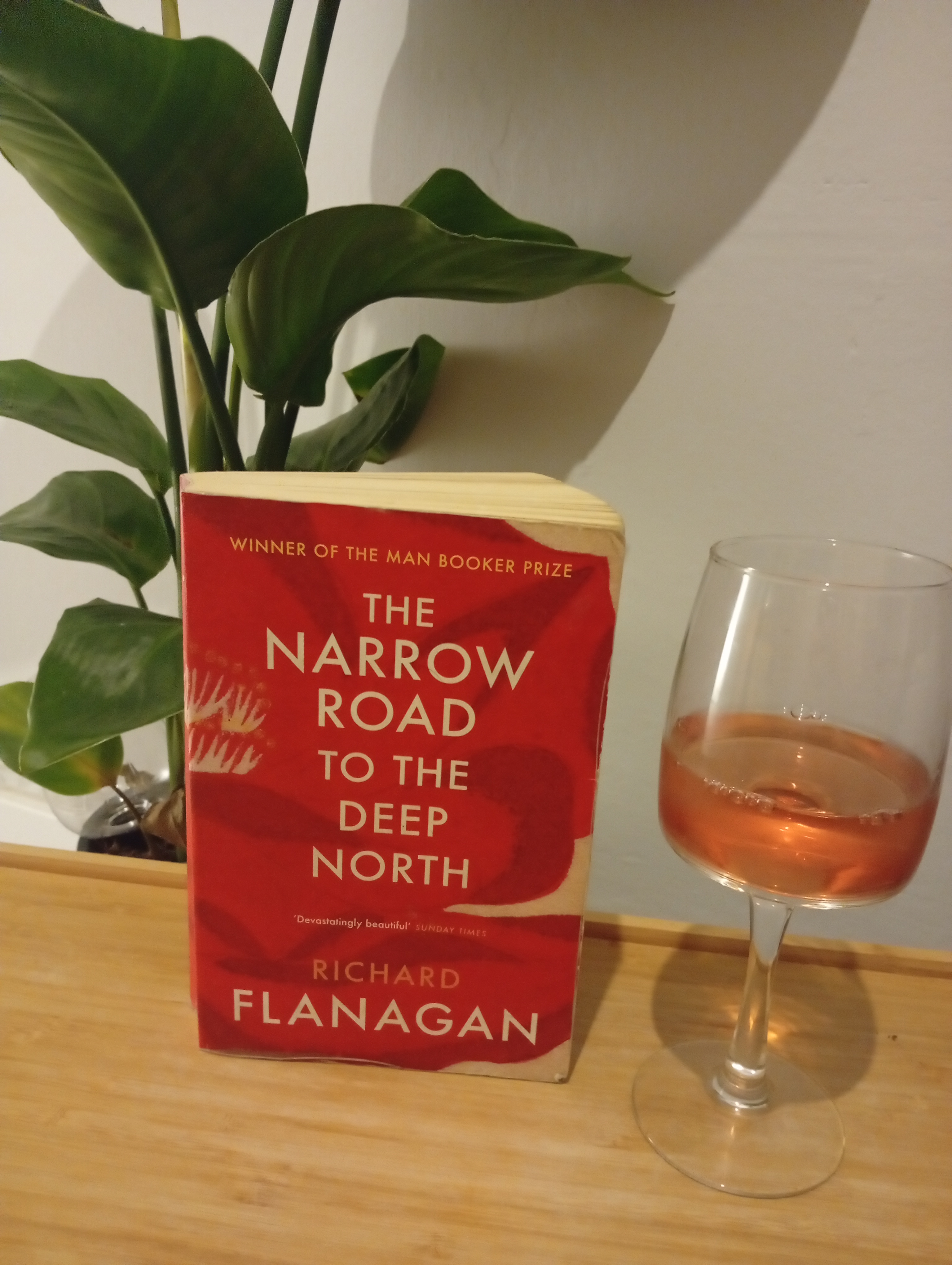
Author - Richard Flanagan
Year of publication - 2013
From 1940 to 1943, hundreds of thousands of South-East Asian civilians and Allied prisoners of war were forced to build a railway line in Burma. Seen as crucial to the success of the Japanese war effort in WWII, many thousands of these enslaved workers died during its construction, leading to it becoming known as the ‘Death Railway’. After the war, although the surviving Allied soldiers were rescued and repatriated, many others were left in makeshift camps, subjected to the same gruelling conditions and continuing to perish from malnutrition, cholera, dysentery, and other illnesses.
The Narrow Road to the Deep North tells the story of one of these POWs, Dorrigo Evans. Before joining the war effort, Dorrigo embarks upon a brief but passionate love affair with his uncle’s wife, Amy, a vibrant but troubled young woman whose character and beauty bewitch him. Years later, following his rescue from Burma and the establishment of a high-profile medical career, we find him deeply conflicted about both the affair and his actions during the war.
I won’t deny that I disliked Dorrigo at the beginning of the book. He is a deeply flawed protagonist, marked by his wartime experiences, and appears aloof even when the reader is allowed to delve deep inside his feelings and emotions. In these early chapters, we are forced to endure some very gloomy and self-pitying soliloquies detailing the loss of the love of his life and the incredulity he feels at being lauded as a war hero and skilled surgeon, feeling that such acclaim demonstrates a “failure of perception” among his admirers. His philandering is another flaw, since he’s married to a kind and dutiful woman whom he apparently has no problem betraying through a long series of meaningless encounters with young women. Both his dispiriting inner dialogue and his personal failings make for, in my view, a decidedly unsympathetic character.
While this opinion didn’t necessarily change by the end of the novel, my perception of these personality traits certainly did. Viewed through the lens of his time as a POW, they become very understandable. Indeed, anybody subjected to such depravity and mistreatment would be hard-pressed to be a cheerful, likeable character. In this sense, one has to praise Flanagan’s character development. Rather than changing Dorrigo for the reader’s benefit, it’s the reader who must develop sufficient empathy and understanding over the course of the novel to change their own mind by the end.
Naturally, much of the book revolves around the Burma Death Railway and the conditions faced by the captive workers. Dorrigo, having been given command of his regiment after their capture at the Battle of Java, has the unenviable task of treating the many ailments rife in the camp. The descriptions of the various diseases and other problems are terrifyingly vivid. The author takes pains to bring the reader into the hospital tents and make them share in the sights, smells and sounds that accompany Dorrigo’s work tending to the sick and dying. One particularly arresting moment sees Dorrigo operating on a patient whose leg must be amputated. The patient eventually dies from blood loss, and a small glimmer of optimism, sparked by the initial success of the operation, is quickly snuffed out by the character’s brutal end, leaving the reader in no doubt that the story will provide no happy endings.
While stories about the appalling treatment of prisoners and the merciless conditions under which they were forced to work are widespread, Flanagan goes further than many others in his effort to explain the reasons behind the savagery of the Japanese officers. How easy it is to dismiss these men as monsters, utterly lacking even basic empathy and unworthy of even the rope it would take to hang them. Their actual motivations, however, are much more complicated than that, as the novel adequately explains through the character of, among others, Major Nakamura.
In Japanese culture, and indeed as codified in military training and rule books, surrender was considered unacceptable. If a soldier wasn’t killed in battle but their side had lost, they were expected to take their own lives. To a Japanese warrior, troops who had surrendered and been captured as POWs lacked honour and were therefore, in some way, considered subhuman, undeserving of respect or humane treatment. Moreover, the novel explains that senior officers such as Major Nakamura were under relentless pressure from the empire, and by extension the emperor, to finish the railway. The planned invasion of India could not be achieved without this vital supply line, and the price of failure was dishonour, shame or even death. Just as Flanagan managed to change my perception of Dorrigo, I was struck by how much I came to understand the challenges faced by these men. When another character, the ‘Goanna’, is executed for his crimes near the end of the story, still lamenting the non-payment of his army wages, I felt acutely sympathetic to the soldiers who were ultimately also victims of the regime they served.
At this point, I think it’s safe to say that I enjoyed the novel. However, its winning of the Man Booker prize is worthy of a mention here. I always enjoy looking at the winners and the runners up of the prize, as well as others like the Nobel for Literature, but upon learning the name of the winners of these much sought after and highly prestigious awards, I often find myself slightly disappointed. This is absolutely not because I believe that these novels and these writers are undeserving of the accolades, but rather I feel that they are being made more and more inaccessible to the vast majority of the reading public.
The Narrow Road to the Deep North is indeed a masterpiece, and one that I am glad to have read, but to be painfully honest the style of prose and other aspects of the writing made it a struggle to get past the first few chapters. Is it worth it to press on? Absolutely. Does it get easier to read once you are invested in the characters? Of course it does. But should these awards be setting ‘pushing on’ as the standard for great literature? Of course, definitions of ‘heavy-going’ differ among generations, level of dedication to reading, and genre-preference, but I can’t help but think that ‘hard-going’ has become the norm for the panels that make these decisions. Why do authors have to wrap themselves in endless metaphors, invent weird and wonderful new ways to describe objects and people, and throw themselves at the mercy of innuendo in order to be recognised by lofty literary institutions? Since when have ’easy-reading’ or ‘a real page-turner’ become taboos? Must the winner always exhibit some kind of ’experimental flair’ when putting pen to paper?
In any case, and despite the occasional need to put the novel down and have a sip of something strong, the book is a triumph. Though I might wish that the same story had been told in a slightly more reader-friendly manner, it is indeed worth pushing on in this instance. Above all, it brings life to an incredibly important story, one which deserves to be told.
Leave a comment
Have something to say about this article? We'd love to hear from you. Comments are reviewed before they appear on the site.