Since the release of Christopher Nolan’s The Odyssey, classical Greek literature has been experiencing something of a renaissance. Entirely understandable, if you ask me. Had I had the opportunity to see Matt Damon in scanty armour back when I was studying Classics, my exam results might well have been better.
Alas, I had to read the entire poem cover to cover to placate my teacher, who was uniquely talented at finding sexual innuendo in every single passage. Although I have always been an avid reader, the curriculum and teaching methods have a wonderful way of sucking all the fun out of literature. By the end of it, I was so sick of analysing every comma and adjective that I developed a deep aversion to anything concerning the Ancient Greeks.
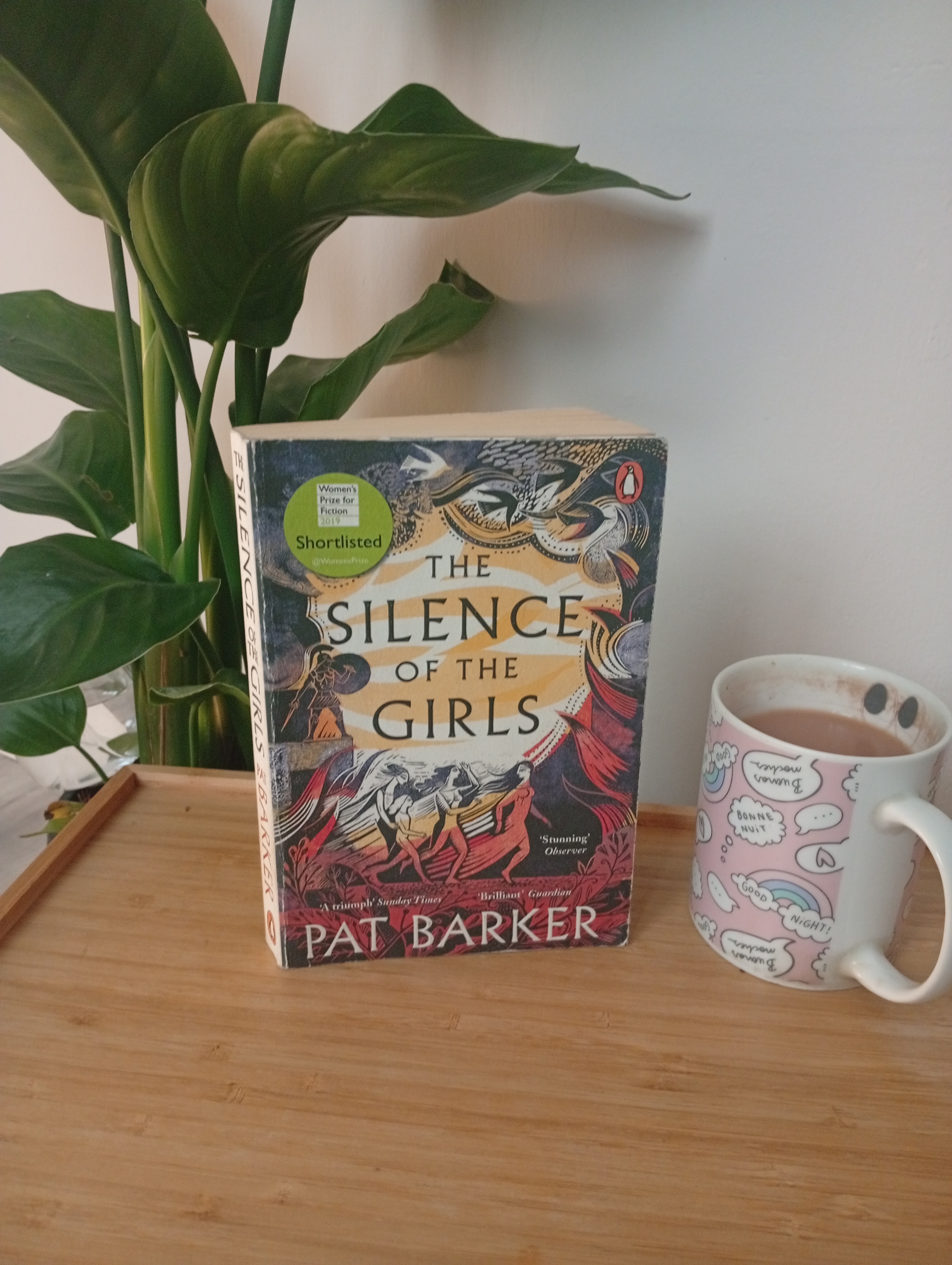
Determined to overcome this prejudice, I recently picked up The Silence of the Girls by Pat Barker, eager to explore another side of the events of The Iliad. Through the eyes of Briseis, a Trojan queen and niece of King Priam, I discovered an altogether different perspective on the conflict. When Helen was taken from Sparta, prompting her husband Menelaus to seek revenge, history and Hollywood tell us that a thousand ships were launched in response. But what of the consequences for the other women caught up in the war?
Barker opens with the sack of Lyrnessus, an event that also features in The Iliad. Among the warriors present is Achilles, who claims Briseis as part of his share of the spoils. What follows is an account of her captivity in his household, charting the humiliation and suffering of a woman who has gone from royalty to being treated as little more than property.
Initially, I found myself confused, even a little put off, by the way Briseis appears to accept her fate as the concubine of the mighty Achilles with such apparent meekness. Having been born and raised in luxury, one might expect her to show some resistance or indignation at her new circumstances. Instead, her internal monologue suggests that she comes to terms with her ghastly situation remarkably quickly. I struggled to understand why our protagonist seemed to offer so little protest, even in her own thoughts.
On reflection, however, I realised that this reaction was itself rather privileged. I was judging Briseis through a modern lens, expecting her to respond as a woman with freedoms and choices that she could never have imagined. Resistance, whether physical or psychological, is not always possible when survival depends on accommodating those who hold absolute power over you. In the brutal world Barker depicts, women are routinely treated as possessions, their value determined by the men who own them, whether they happen to be queens or prisoners of war. Briseis’s apparent acceptance is therefore not necessarily an absence of defiance, but a reflection of the terrible limits imposed upon her.
The novel’s feminist message is unmistakable. Barker lays bare the cruelty, humiliation and dehumanisation inflicted upon women during wartime, exposing the uncomfortable truth that the glory of heroic conquest is built, in part, upon the suffering of those who have no say in it. The men of The Iliad may be remembered for their courage, honour and feats of arms, but for the women left in their wake, victory and defeat offer little distinction. A city can be conquered, its men slaughtered and its women enslaved, all in the name of a quarrel that was never theirs to begin with.
What makes The Silence of the Girls particularly compelling is the way it challenges the mythology surrounding these events without losing sight of the people trapped within it. Achilles, the legendary hero, remains a formidable presence, but Barker rarely allows us access to his inner world. By keeping him largely outside the narrative voice, she preserves his distance and inscrutability; we see him primarily through Briseis’s eyes, as a man whose moods and actions can determine her fate, but whose true thoughts remain beyond her reach. This narrative choice reinforces the imbalance of power at the heart of the novel. Achilles is not simply a man who holds Briseis captive; he is someone she cannot fully understand, predict or challenge. The grandeur of his reputation sits uneasily alongside the reality of his treatment of her, and the familiar story becomes something far uglier when viewed from the other side of the battlefield.
Barker reminds us that the heroic narratives handed down through the centuries have often depended on whose voices were considered worth preserving. The Silence of the Girls is not simply a retelling of a familiar myth; it is a challenge to the way we tell stories, to the heroes we celebrate, and to the people we leave out. The Trojan War may have been fought over Helen, but its cost was paid by countless others whose names and experiences were never granted the same immortality as those of the men who fought it.
Perhaps, after all these years, the Ancient Greeks and I can finally make peace. I would recommend The Silence of the Girls to anyone seeking a more readable alternative to Homer’s writings, a sadly-lacking female perspective of events almost always told from a man’s, or as a Sunday read to escape from the world for a while.
Leave a comment
Have something to say about this article? We'd love to hear from you. Comments are reviewed before they appear on the site.